

The Wildscribe’s Trap: Treating Framework Like a Cage
Your story and your methods count, too.

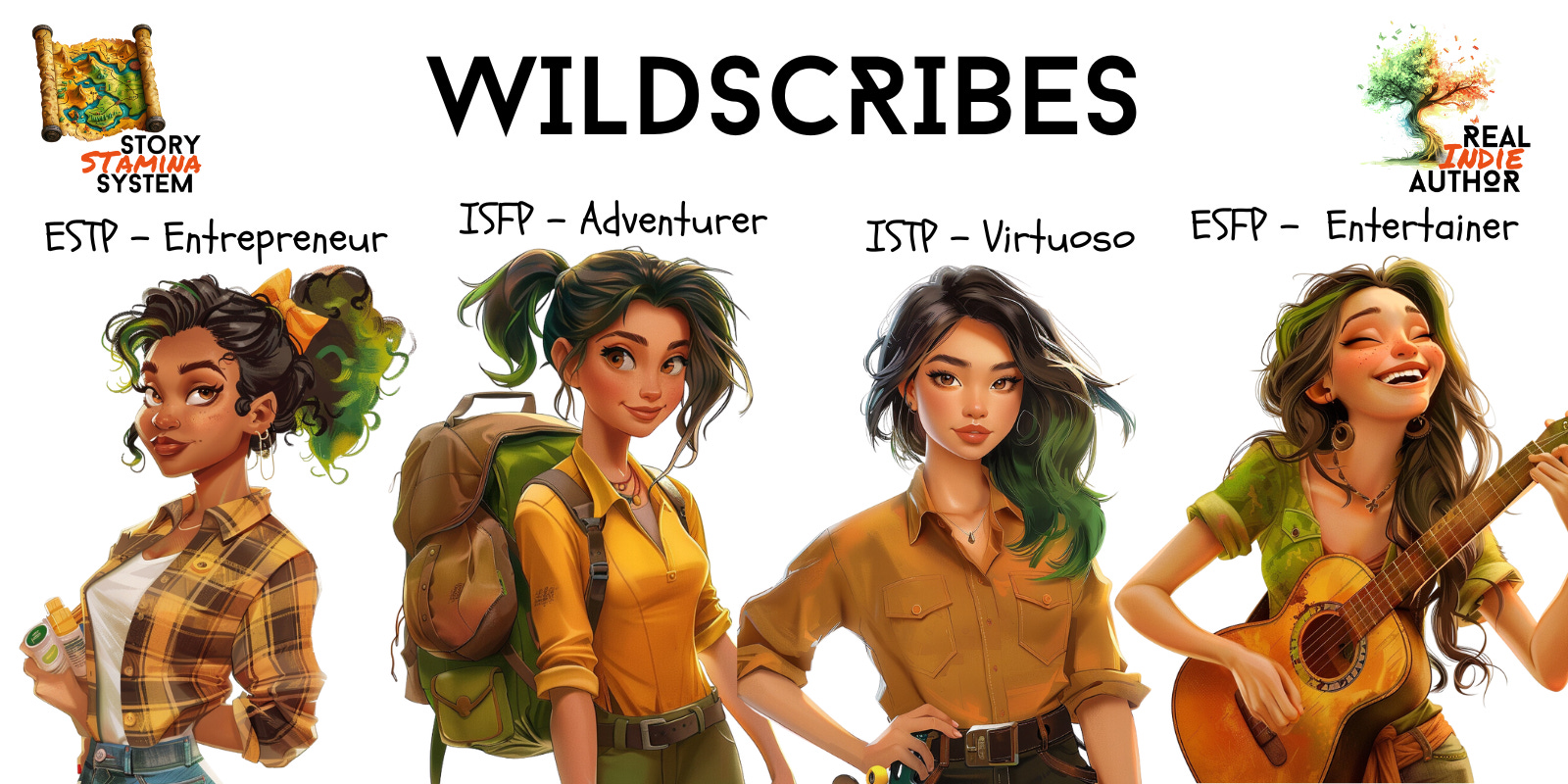
I love my Wildscribes, but the Mythmaker in me wants to scream a little because the one thing that Wildscribes hate the most is the one thing I pride myself in the most: creating systems that work.
So, after working and failing… OMG. So many Wildscribes. Like, all of my Wildscribes… I have created a series of toolboxes that are not systems. They’re tools. AND discovered that they’re a lot more like Mythmakers than either of us had realized.
And just understand that the Wildscribe I had the opportunity to beat my head against the most is my husband. He’s still live. As am I. And we’re both still writing AND we’re both still married. To each other.
For now.
Hehehe.
OMG.
Okay. So! The things Wildscribes hate the most is anyone telling them how to do something. They could tell you the rule they’re following, but as soon as that rule falls out of your mouth in their direction, the heels dig in, the hackles raise and it’s “Good luck, Bronco Rider,” because you’re about to get knocked into an alternate universe of “why don’t you just shut up and let me drive my way.”
The fear confinement, loss of creative oxygen, loss of identity, and “becoming everyone else.”
Guy, this is my husband, both of his daughters, and at least two of our dogs and three of our cats. Actually, I think all cats are Wildscribes. If cats could write.
Here’s what happens when Wildscribes abandon and refuse structure entirely. Their projects never get done, deadlines are never met, momentum dies, guilt builds, they pivot and focus on the one thing they can do that brings them nothing - like a dozen project cars - and they disappear.
And let me tell you. It’s not because they lack discipline. These are some of the hardest working people I’ve ever met. I mean, look at these descriptions. These are entrepreneurs, adventurers, handymen/women, and entertainers. These are not lazy people!
But they fear the thing that will help them the most because framework often feels like a cage, not a foundation.
So… that was my challenge; trying to build a “system” that didn’t feel like a system that would still give them the freedom they needed to move.
This was the most challenging thing I’ve experienced. I have saved not one but two hospitals from being scrapped during construction. I’ve coordinated and managed the installation of a fire alarm system in another country. I’ve managed motor controls that were so over my head, I went home feeling like the biggest idiot the world had ever seen. And yet, those were all more doable than this.
Wildscribe, you’re running from the very thing that would protect your freedom.
Your burnout patter is: Spark → Freedom → Resistance to structure → Scattered effort → Guilt → Abandonment → Restart
Here’s a deeper dive in how that looks.
Starting more than finishing
I typically can tell my Wildscribes before they tell me their personality because they say, “I need help finishing a book. I don’t care which one. Just pick one.”
They’re so frustrated by themselves and they’re in the guilt trap of their own making because they can’t figure out how to get to the finish line of a book. They’ll even team up with other authors hoping that’ll be a way to get it done, and it works sometimes, unless that other author feels like they’re doing all the heavy lifting. And then, well, good luck.
So, you know those word-count spreadsheets Lorekeepers and Mythmakers love? Wildscribes hate them. They like them for about a week, and then it starts to feel like a bludgeoning weapon.
They’re fueled by creative spark, freedom to wander, immediate feedback, mastery of doing well - which why they’ll disappear into something they know how to do well like rebuild dead vehicles - and emotional alignment.
What derails them? Having to do it consistently, long-range plans, rigid milestones, and legacy positioning.
So, working with Wildscribes is all about giving them toolboxes, keeping schedules fluid, and not planning too far into the future.
When their spark is missing, they need writing challenges that respark the fun and then they need to focus on one thing that seems interesting in the next scene, which could mean that the scene changes. Look, don’t fall in love with an outline or plot line with a Wildscribe. You need to know where the book starts, but don’t get married to it, and know where it ends, but, again, don’t get married to it. If the ending lands in the same solar system but a similar emotional or character beat, count that as a win.
Wildscribes are amazing storytellers who can take you on a ride you didn’t see coming.
Though, I do find it hilarious that my Wildscribe husband gives me a hard time because I had a hurricane derail a scene I had planned because he’s never had that happen to him.
Mistaking flexibility for progress
Most of my Wildscribes see themselves as pavers of new pathways. They discover the unknown, and walk where no one else dared before.
What they fail to realize is that sometimes, they travel where no one can follow, including themselves.
Progress is made when you discover or create a way of doing something that can be repeated - like fixing a broken car. The reason Shane can fix so many cars is because he’s repeatedly swapped out transmissions, motors, pumps, belts, and filters.
Now, does he do it the same way each time? No. Absolutely not.
Does he get the end result each time? Yup. Well, very nearly yup.
Writing is the same thing. It’s the same way. And when you start looking at the “systems” and “approaches” as tools instead of cages, you’ll have an easier time building a sustainable career.
It really is about being able to repeat the same thing 1,000 times. But with Wildscribes, you need the ability to feel it out each time. That’s fine! That’s still fine.
You would never look at a guitar or a screwdriver or a backpack or a calculator as a cage. Those are tools.
So are timers. So are chairs. Desk set ups. File folders. Documents.
Reframe how you see the tools that will help you so you stop fighting them. Freedom without repetition doesn’t build a career.
Burning out from scattered energy
Another way I know my Wildscribes before they tell me their personality type is that they tell me they’re out of energy. Though, it’s always in a “I just can’t open it,” when talking about opening the Word document. Or, “It takes me so long to write.” And that’s another reason they hate word-count games. Almost everyone writes faster than they do. Which is fine. It’s not about speed. It’s about storytelling.
When a Wildscribe can’t stay motivated on one thing, they will start a bunch of projects and finish none of them.
See, here’s something I’ve discovered about myself - and others - by helping my Wildscribes. When I’m in chaos or out of sync, I’m a Wildscribe. All of my systems stop working. My heart-felt motivations stop working. And I have to follow my feet. As a Mythmaker, that is the most bizarre feeling ever.
It’s not just about having a bunch of unfinished projects. Those projects carry a weight inside of you that’s heavy because of the rocks of guilt you pile on yourself for being a failure.
Sabotaging systems the moment they feel restrictive
You might be surprised to know that almost all of my Wildscribes prefer detailed outlines. That seems weird, right? They need flexibility, but they love having detailed outlines.
My Wildscribes don’t like wandering in the dark. They know they want to write and they know they want a career in writing, so when I wrote outlines for them, I made sure to keep their “spark” in mind, and I gave them options.
Now… Wildscribes aren’t great at writing their outlines. They do better when someone “turns the light on” for them and shows them the path. And! It is also rare for a completely written outline to be salvageable after the first few chapters are written. So, outlining in batches is the way to work with Wildscribes.
As soon as the spark is forgotten, or a guiding hand becomes too restrictive, they don’t just buck the system. They don’t just throw out the outline. They will leave the entire book. They’ll throw out the book and sometimes the entire career.
This is why creating a system that can help Wildscribes build sustainable careers has been challenging. Every single time I find something that works and my inner Mythmaker makes the mistake of say, “This is the system,” all my Wildscribes revolt! I’m not even kidding.
Closing Advise
If you’re a Wildsribe, you have keep yourself from viewing approaches like cages and start seeing them as tools in your toolbox. You need freedom, so when one tool stops working, pick up the other. Your outline isn’t going to be clean. It could be part-way in OneNote, part in an actual notebook, part on index cards, you might have several chapters on color-coded sticky notes, and some really odd ideas sketched out in your best friend, ChatGPT. But those are all tools.
Your challenge is going to be organizing all those thoughts into a cohesive series bible, and for the love of all things growing, don’t ask someone else to clean up your mess for you all the time. It’s frustrating and, unless you’re paying them for their time, it feels like slave labor.
You need freedom, contained sprints that aren’t competition. You need to see your progress, so find a way to put it on your wall or your ceiling if it’s slanted. Use that space. Whatever systems or tools you use, make sure they’re adaptable.
In order for you to succeed in creating a sustainable indie author career, you need direction for the fire to burn, containment to fire to maintain, and a patter that doesn’t consume you.
